There was a time when making a suit meant sitting across from a tailor who knew your name, your posture, your preference for a slightly higher right shoulder. The tailor was the product. Their hands, their judgment, their years of practice — irreplaceable.
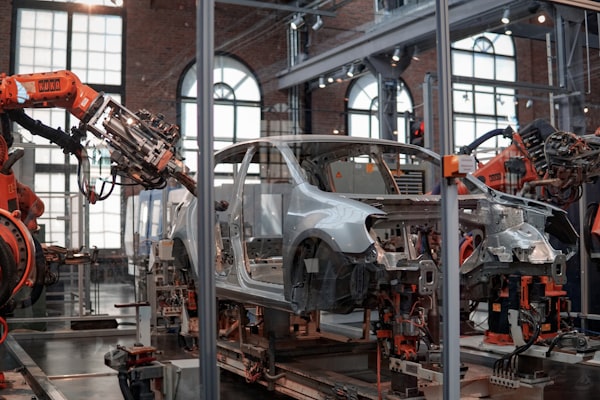
Then came the sewing machine. And then the factory floor. And then fast fashion, global supply chains, and a world where a shirt costs less than a coffee.
The tailor did not disappear overnight. But their role transformed beyond recognition. Most became operators of machines. A few became luxury specialists. The craft survived, but it narrowed.
This is not a story about sewing
It is a story about every profession that has ever faced a productivity revolution — which is to say, every profession.
Accountants who once spent weeks manually reconciling ledgers now run audits in hours with software. Radiologists who spent careers developing expert intuition are now collaborating with AI that reads MRIs with superhuman accuracy. Writers, lawyers, analysts, teachers — all facing versions of the same question the tailor faced: What part of what I do is irreplaceable?
The industrial revolution answered this question brutally and then generously. It destroyed certain jobs and created entire new industries. The net outcome, measured over generations, was rising living standards and new categories of work that no one had previously imagined.
The AI revolution is different in one important way
The industrial revolution primarily replaced physical labor and routine cognitive work. The AI revolution is targeting the kind of work that, until recently, we thought was exclusively human: pattern recognition, language, reasoning, creativity.
This does not mean all jobs disappear. It means the bar for what counts as distinctly human contribution is rising — fast.
The tailor who survived the sewing machine era was the one who understood something no machine could replicate at the time: taste, context, relationship. The employee who will thrive in the AI era is the one who understands what the machine still cannot do — and builds there.
What this means for you right now
Start by auditing your work. Which tasks are you doing that a well-prompted AI could handle in seconds? Which tasks require your unique context, relationships, or judgment? The gap between those two lists is where your career strategy should live.
The crafters who survived industrialization were not the ones who refused the machines. They were the ones who learned to use them — and then went higher.
That is still the playbook.